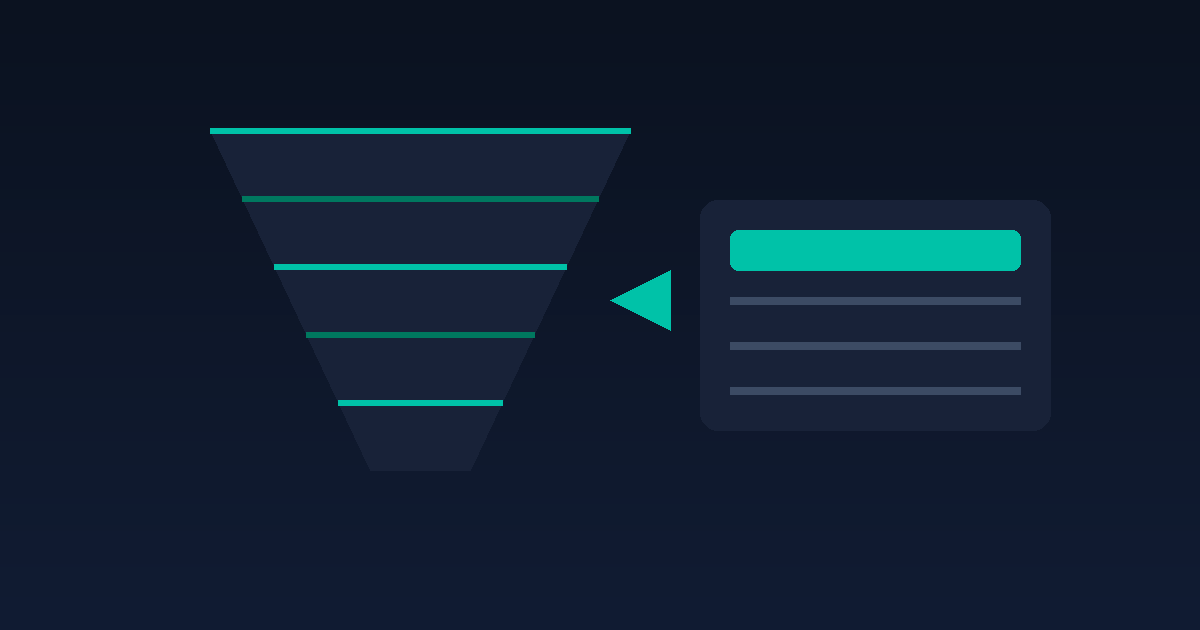
Imagine a plumbing business in Bristol running a Google Ads campaign for "emergency plumber Bristol." The ad copy promises a fast callout. Someone clicks, and lands on the homepage — with a menu, a photo gallery, a list of five different services, and an About Us section. Nowhere near the top is the thing that ad promised: a fast, obvious way to call right now. That visitor, in a genuine emergency, is far more likely to hit the back button than to hunt through the homepage for what they need.
Why this happens so often
It's an easy mistake to make, because it doesn't feel like one. The homepage already exists, it looks professional, and pointing an ad at it seems like the sensible, low-effort option. The problem is that a homepage is built to serve every visitor equally — someone researching your business, someone comparing you to competitors, someone who's already decided and just wants to book. An ad click, by contrast, comes from someone who's already expressed a specific, immediate intent. Serving them a generalist page wastes that intent.
What a dedicated landing page does differently
A dedicated landing page is built around exactly one goal, matched precisely to what the ad promised.
- No competing navigation — nothing to click away to except the one action you want them to take
- Messaging that mirrors the ad, so the visitor immediately recognises they've landed in the right place
- One clear call to action, repeated where it makes sense, rather than several competing options
- Faster load time, since paid clicks are the most expensive traffic you'll ever receive — every second of delay before the page loads is money spent on a visitor who might already be gone
Why load speed matters more here than anywhere else on your site
You've already paid for this click before the visitor sees a single pixel of your page. If the landing page is slow, a meaningful share of paid visitors will leave before it even finishes loading — meaning you've paid full price for a click that never had a genuine chance to convert. This is exactly why we build landing pages with React and Vite specifically: the technical foundation directly protects your ad spend, not just the visual polish on top of it.
A simple way to picture the difference
Think of your homepage as a shop window, designed to be interesting to everyone walking past. A landing page is more like a member of staff standing at the door, having already heard exactly what the customer is looking for, and walking them straight to it. Both have a role — but using the shop window to answer a specific, urgent question usually loses the sale.
When your homepage genuinely is enough
Not every campaign needs a dedicated landing page, and it's worth being honest about when a homepage will do just as well:
- Brand awareness campaigns, where the goal is general visibility rather than an immediate action
- Very small, low-budget test campaigns, where building a dedicated page isn't yet justified by the ad spend
- Campaigns where your homepage already focuses tightly on a single service, rather than several
What to check if you're already running ads to your homepage
Before building anything new, it's worth auditing what's actually happening today:
- Does the top of your homepage match what your ad copy promises, within the first few seconds of loading?
- Is there a single, obvious next step — a phone number, a form — visible without scrolling?
- How does the homepage perform on a mobile connection specifically, since most ad clicks arrive on a phone?
The honest bottom line
If your ad spend is meaningful and the offer is specific — an emergency callout, a limited promotion, a particular service — a dedicated landing page is very likely paying for itself through improved conversion rate alone, well before you factor in the improved tracking and testing it also makes possible.
How to know if this is actually happening to your campaign
A few honest questions will tell you whether your own Google Ads campaign is suffering from this specific problem, rather than something else entirely.
Are you tracking conversions accurately in the first place?
It's surprisingly common for a business to be sending ad traffic to a homepage with no dedicated conversion tracking configured for that specific page at all — meaning you genuinely can't tell how many of those clicks turned into a call or an enquiry. Before deciding a landing page would help, it's worth confirming your tracking is actually measuring outcomes accurately, since a campaign that looks like it's underperforming might simply be an under-measured one.
Does the ad's promise survive contact with the page?
Read your ad copy, then look at the first thing a visitor sees on the page it links to. If there's a gap — the ad promises same-day service, but the page opens with a generic welcome message and a list of unrelated services — that gap is very likely costing you conversions regardless of how good the ad itself is.
What building a landing page properly actually involves
A landing page isn't simply a shorter homepage. It's built around a single visitor intention, from the headline through to the final call to action, with everything else deliberately stripped away:
- The headline restates the exact offer or promise made in the ad, so there's no doubt the visitor is in the right place
- Supporting content answers the two or three objections a visitor in that specific situation is most likely to have
- The call to action appears early and is repeated, rather than buried at the very bottom of a long page
- Tracking is configured specifically for that page, so you can measure its performance in isolation from the rest of your site
Running more than one campaign at once
Once a single dedicated landing page proves itself, many UK businesses find it worth building a small set of them — one per service, one per offer, or one per season — rather than trying to force every campaign through a single generic page. This also makes it far easier to see, with genuine confidence, which specific offers and messages are actually working.
What a realistic first landing page project looks like
For most growing UK businesses, the sensible starting point isn't a wholesale rebuild of every ad campaign at once. It's picking the single highest-spend or highest-intent campaign currently running, building one focused landing page for it, and comparing performance against the homepage it previously pointed to. That comparison, run over a few genuine weeks rather than a few days, tends to make the case for further landing pages on its own.
Common objections, and why they usually don't hold up
A few reasons businesses hesitate to build a dedicated landing page are worth addressing directly:
- "Our homepage already looks good" — looking professional and matching a specific ad's promise are different things; a page can be both polished and mismatched to what brought the visitor there
- "We don't have the budget for a separate page" — a focused landing page is typically a smaller, cheaper build than a full homepage, since it deliberately does less
- "We're not sure the campaign will keep running" — this is precisely why a landing page is lower-risk than redesigning the whole site around one campaign's messaging
The core principle worth remembering
Every element on a landing page should exist because it helps one specific visitor, arriving with one specific intention, take one specific action. Anything that doesn't serve that goal is, by definition, working against your ad spend rather than for it.
Where to start if this is your first landing page
Rather than trying to solve every campaign at once, pick your single highest-performing or highest-spend ad group, map its exact promise, and build one page that delivers on it directly. Measuring that single page against your previous homepage-based results, over a genuine few weeks, will tell you more about the real return than any general estimate could.
A quick note on what 'converting better' actually means
It's worth being specific about what improved conversion looks like in practice, rather than treating it as an abstract promise. It usually shows up as a higher proportion of clicks resulting in a call, a form submission, or a booking — the same number of clicks, costing the same amount, simply doing more work for the business because fewer of them are lost to confusion or friction along the way. That's the entire case for a dedicated landing page in one sentence — not more traffic, just less of the traffic you're already paying for going to waste.
Does this apply to Facebook and Instagram ads too, not just Google?
Yes, and arguably even more so. Social ad traffic tends to be less deliberate than a Google search — the visitor wasn't actively looking for you the way a search-based click implies, so the landing page has even less room for confusion or delay before losing their attention entirely. The same principles of message match, single focus, and fast loading apply just as strongly, if not more, to social ad campaigns.
Related Reading
VersaRange Digital Agency
Serving startups and local businesses across the UK
Phone: +44 7460 015194